Checked by OPHTAZON
Buy now 120 €
ref : 13092
Available on 2026-04-11
In very good condition
Used equipment.
No refund or exchange
Sold with case
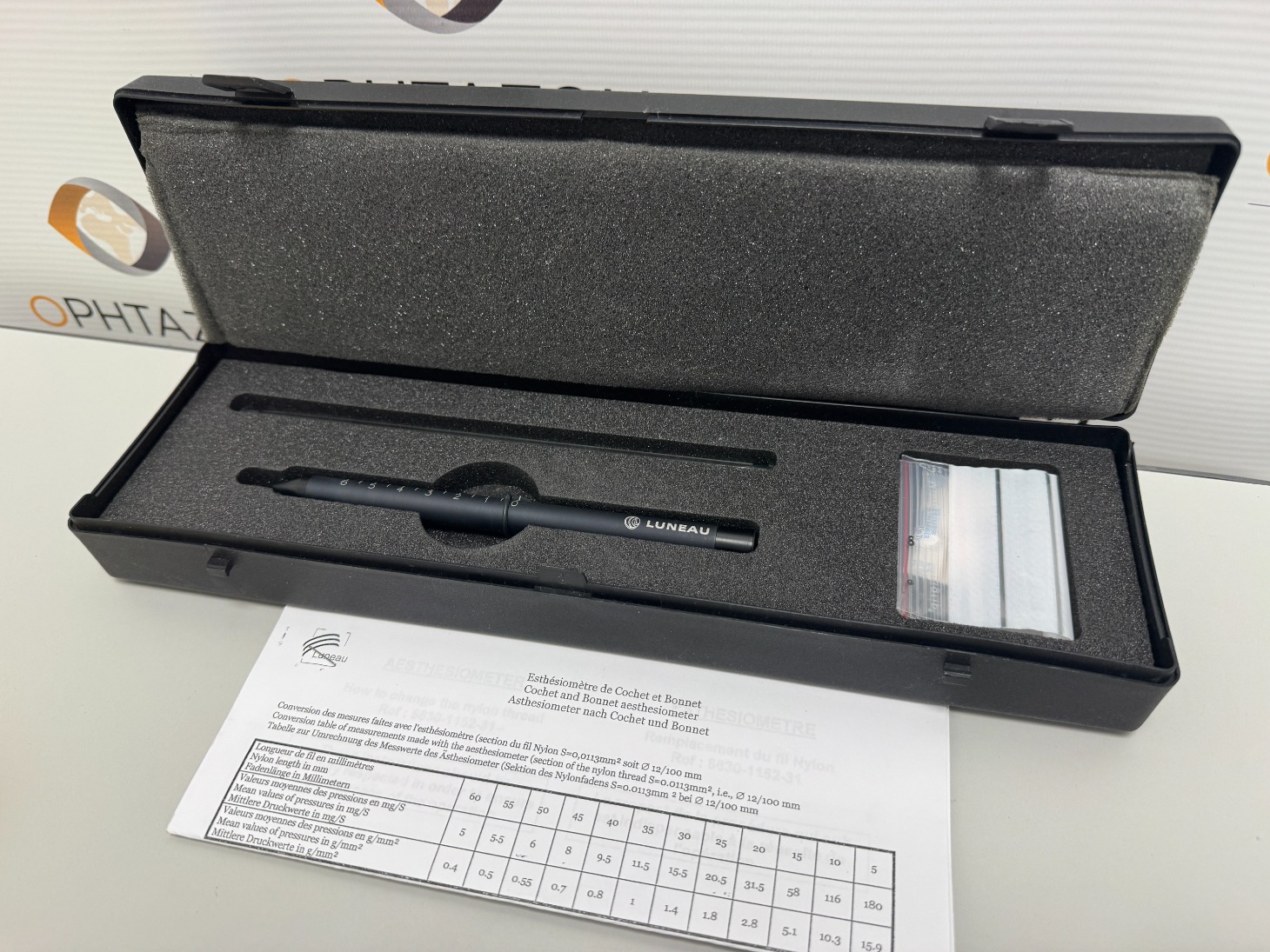
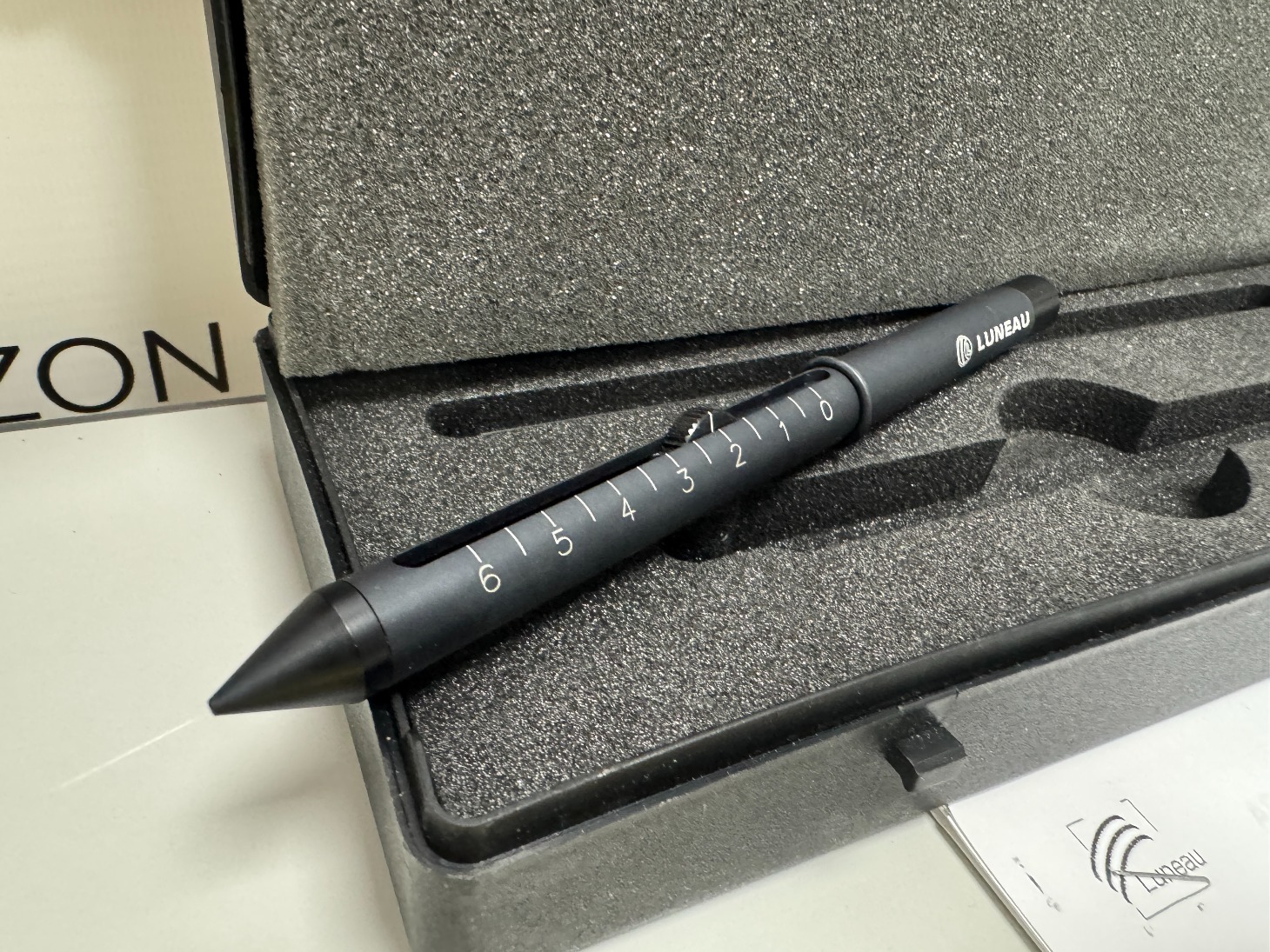
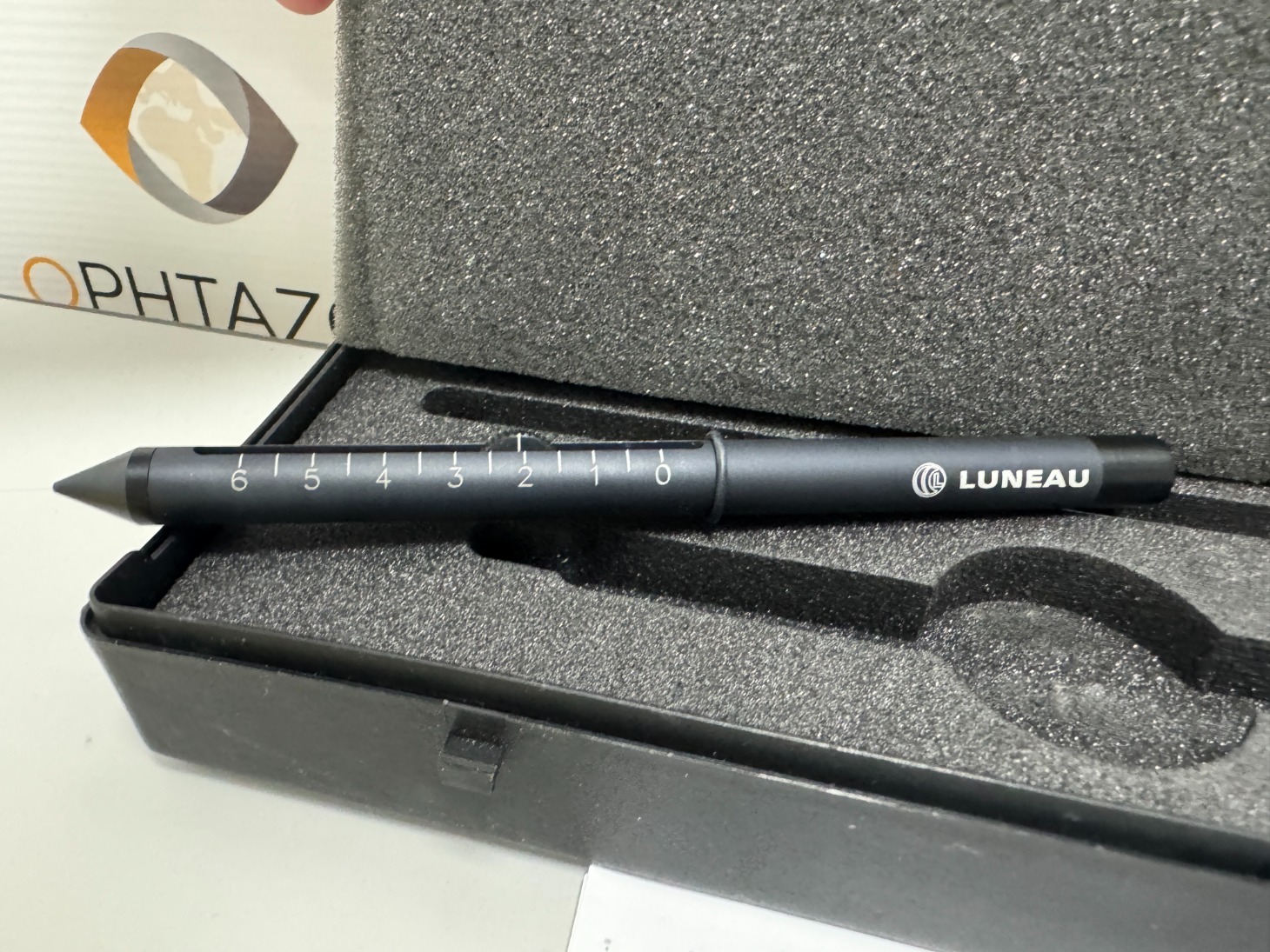
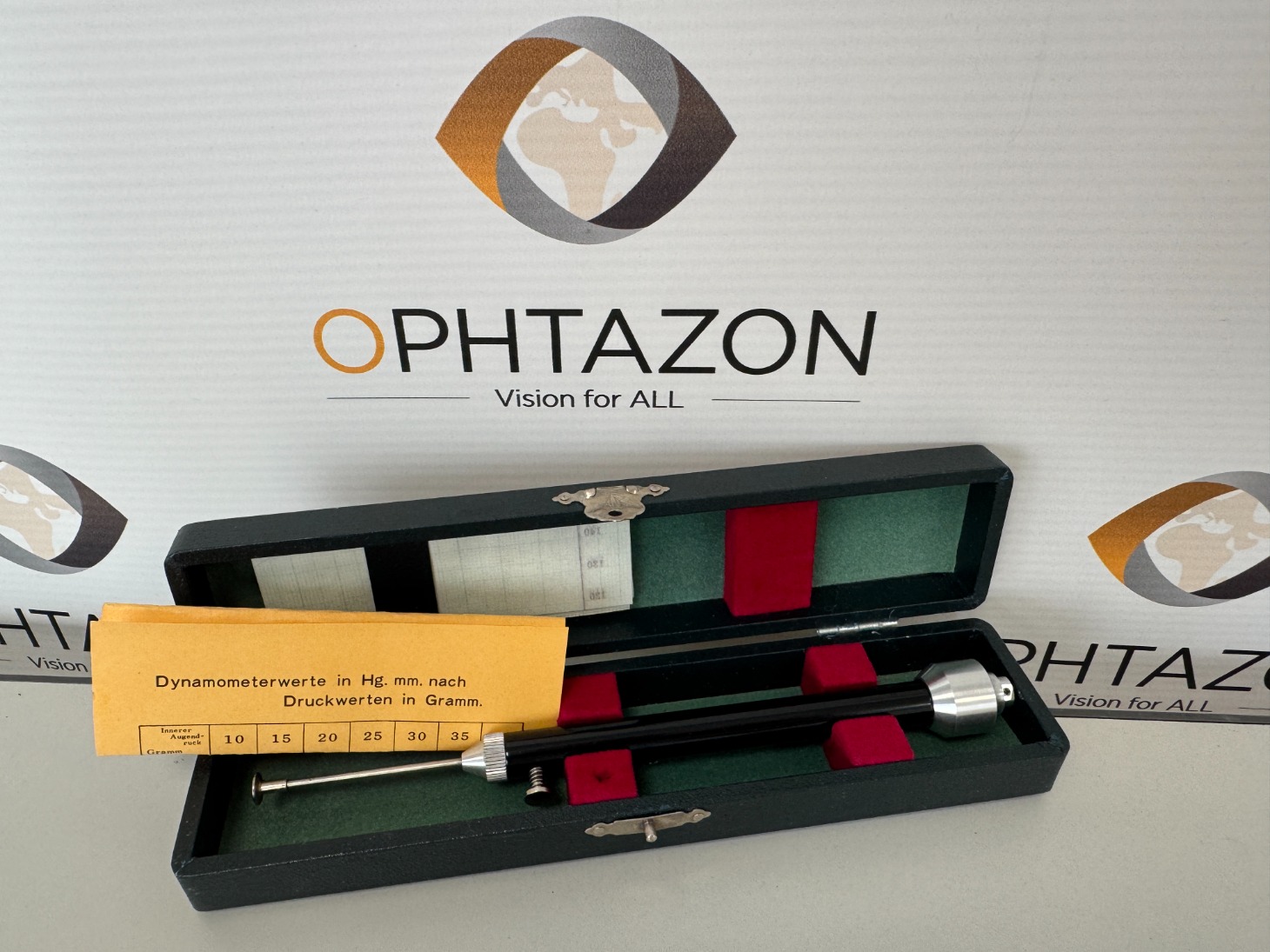
A Cochet-Bonnet esthesiometer is used to measure corneal sensitivity (the tactile sensitivity of the cornea) in a simple, quantitative way.
Principles and device
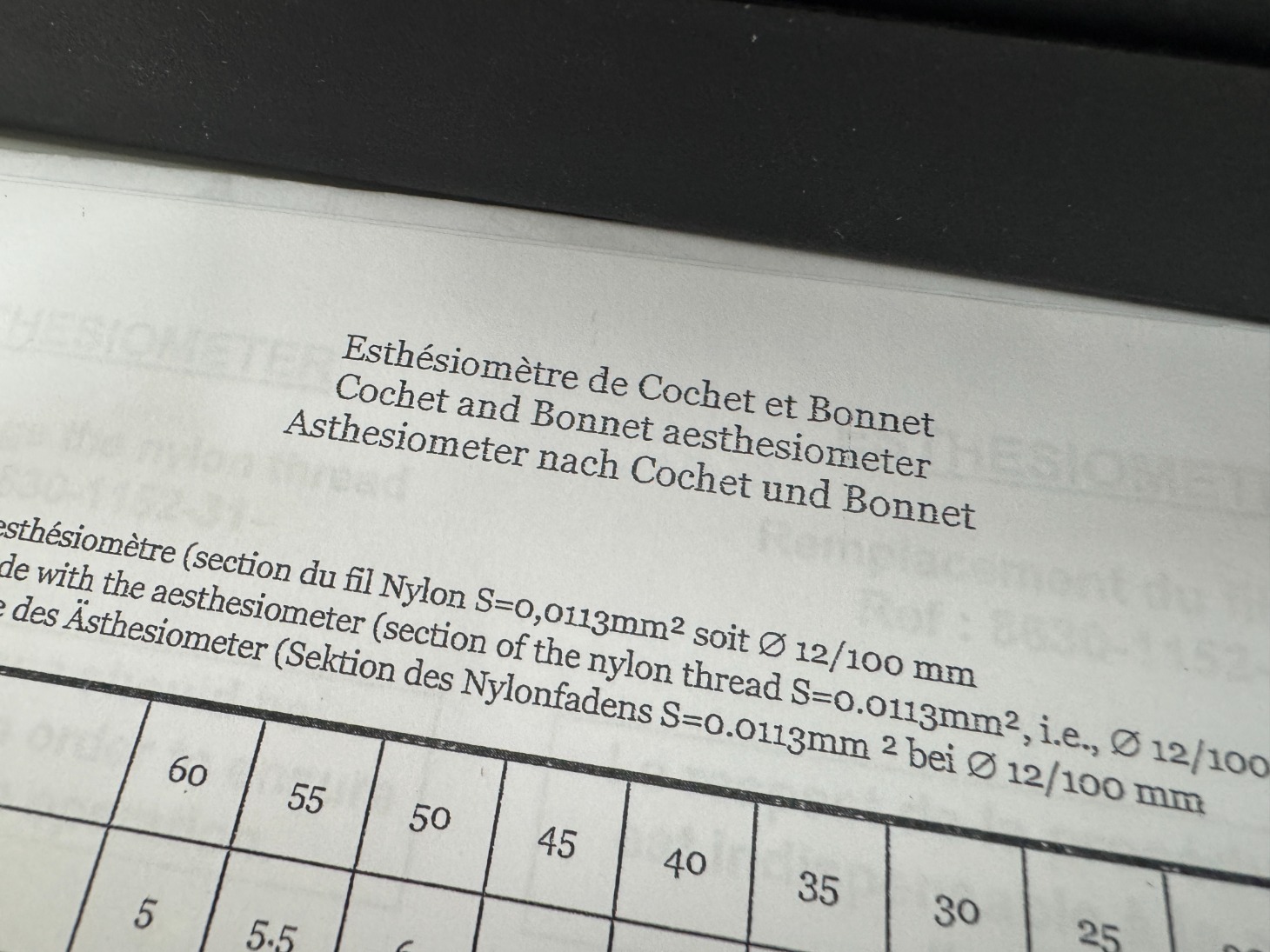
A calibrated nylon filament (generally 0.12 mm) with an adjustable exposed length.
The longer the filament, the weaker the stimulation; the shorter the filament, the stronger the contact force.
The length at which the patient perceives the contact gives a measurement in millimeters (or converted to prismatic dioptres in some tables).
Clinical applications
Detect corneal hypo- or anesthesia (herpetic keratitis, corneal neuropathy).
Monitor progress after eye surgery (LASIK, keratoplasty), corneal procedures or toxic exposure.
Evaluate the effect of prolonged contact lens wear.
Monitor neuropathies linked to diabetes, shingles, multiple sclerosis or trigeminal nerve damage.
Assist in the management of neurotrophic ulcers (risk of poor healing).
Fast procedure
The patient fixes a point; the filament, perpendicular to the cornea, grazes the surface at the prescribed length.
If not felt, shorten in increments until felt.
Measurement repeated at center and, if necessary, at corneal periphery.
Usual values
Normal sensitivity often 50-60 mm (maximum exposed length), depending on device and method.
Lower values = reduced sensitivity; 0 mm = complete anesthesia.
Limitations
Subjective measurement dependent on patient cooperation and technique.
Less precise than modern instrumental methods (e.g. neurophysiology), but simple and useful in routine practice.

Checked by OPHTAZON
 4
4
Year of mfg.
-
Available

Checked by OPHTAZON
 2
2
Year of mfg.
-
Available
Direct sale
 5
5
Year of mfg.
-
Available
Buy now 5 000 €
There was an error when considering the interest of the product. Please try or contact the support.

Your partnership request has been sent by email to the OPHTAZON team.
Your partnership request has been sent by email to the OPHTAZON team.
Your application for a partnership was not successful. Please try again or contact the support.
HOME
sales@ophtazon.com / +33 141 515 490
INTERNATIONAL SALES MANAGER
M. Sadreddine MEHRI
sadreddine.mehri@ophtazon.com / +33 6 08 84 07 42
TECHNICAL & SALES MANAGER IVORY COAST
M. Khaled SELLAMI
khaled.sellami@ophtazon.com / +225 07 68 46 36 14
Nous utilisons différentes technologies pour optimiser votre expérience utilisateur.
Merci de cliquer sur le bouton pour donner votre accord.
Vous souhaitez en savoir plus ? Cliquez ici
 Ophtazon
  Ophtazon Ivory Coast
  Ophtazon Sénégal
  Ophtazon Cameroon