Checked by OPHTAZON
Buy now 120 €
ref : 13612
Available
In very good condition
Used equipment.
No refunds or exchanges
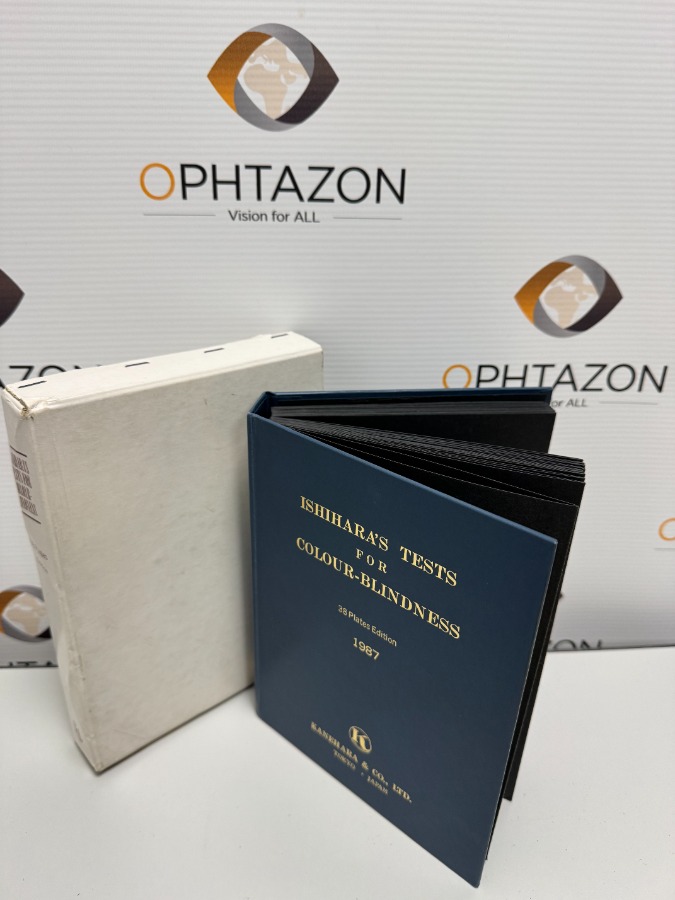
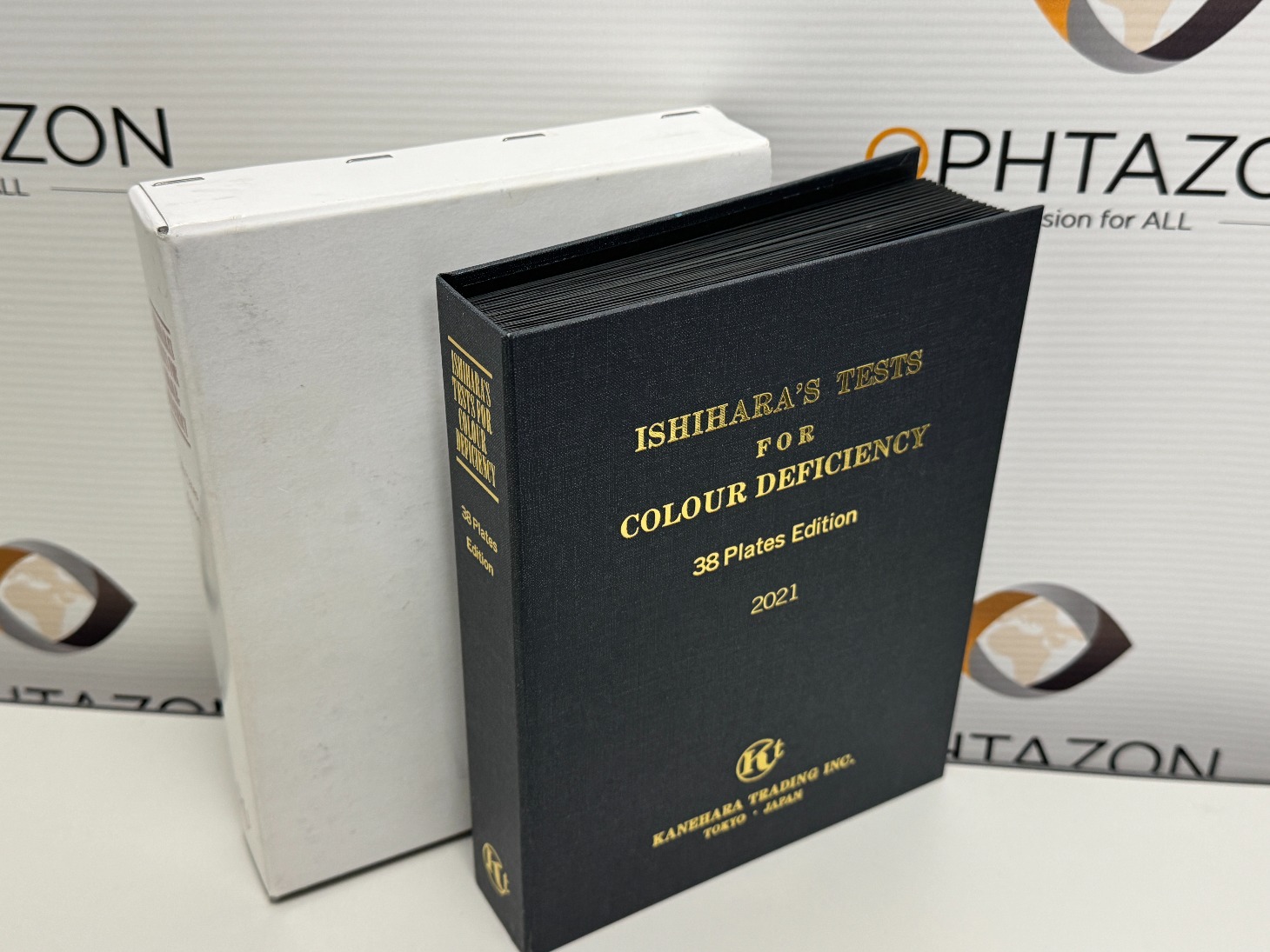
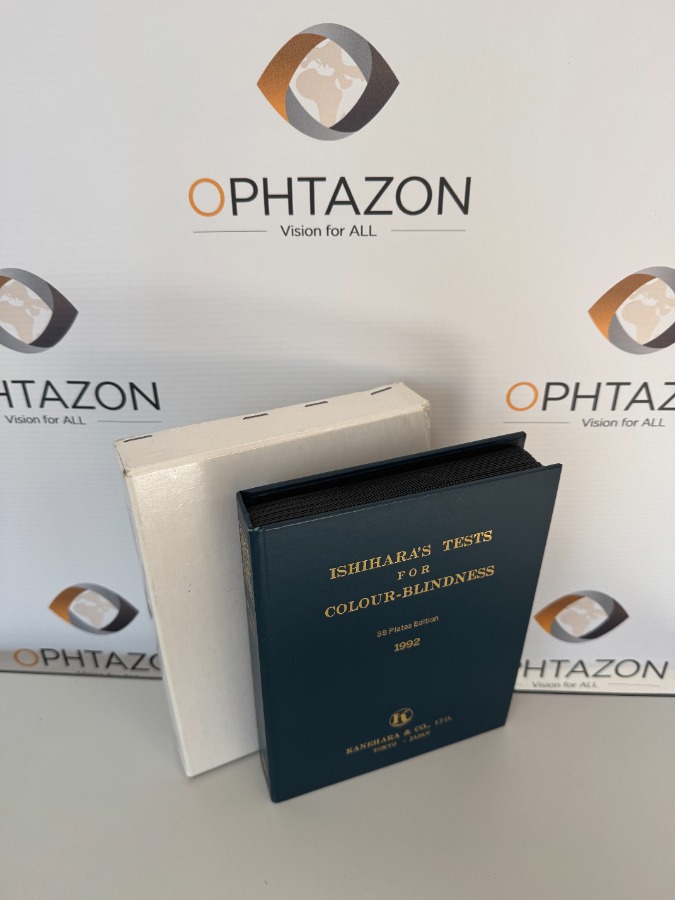
Sold with case
A distinctive feature of individuals who confuse red and green is that blue and yellow appear remarkably vivid to them compared to red and green.
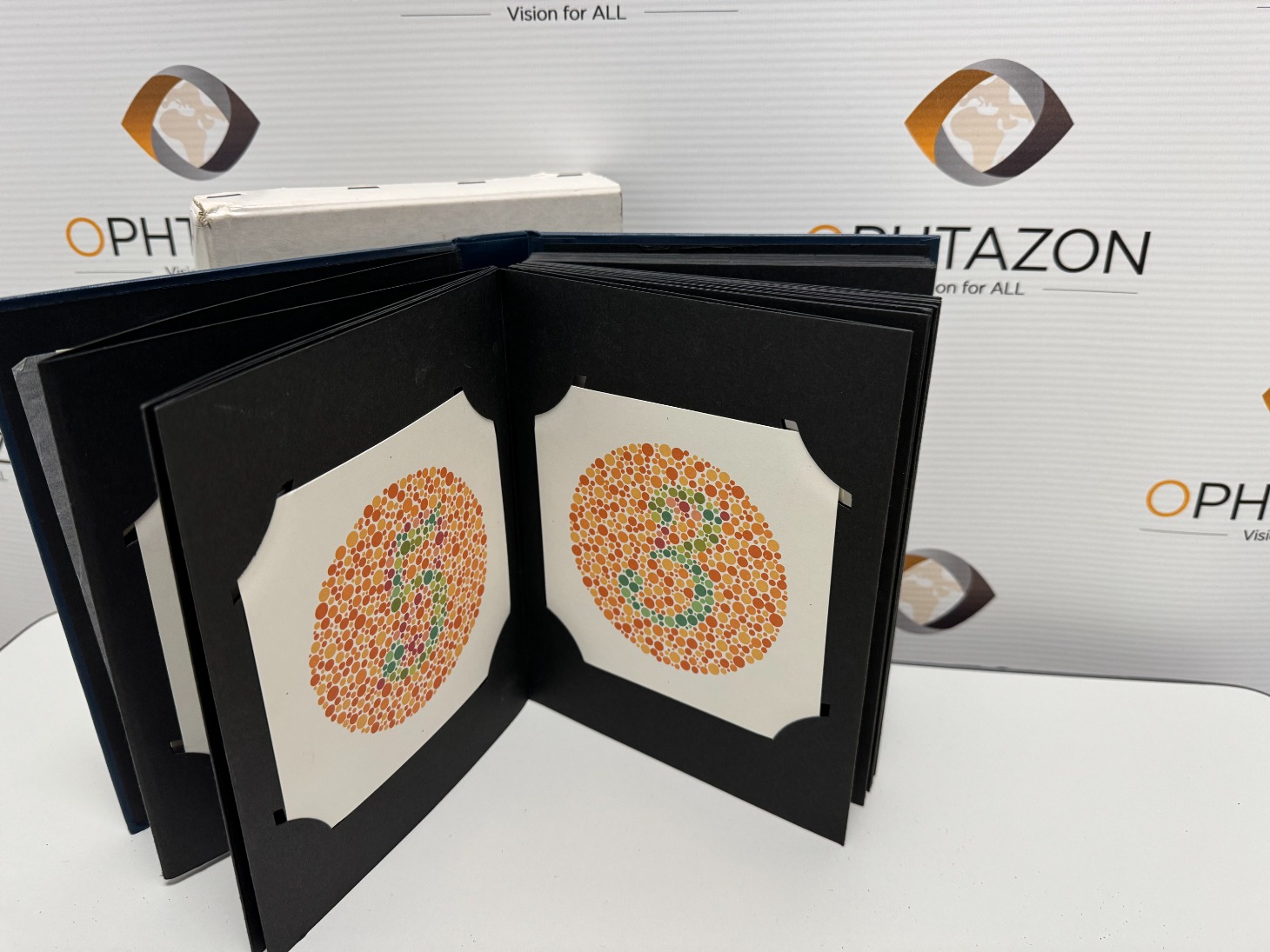
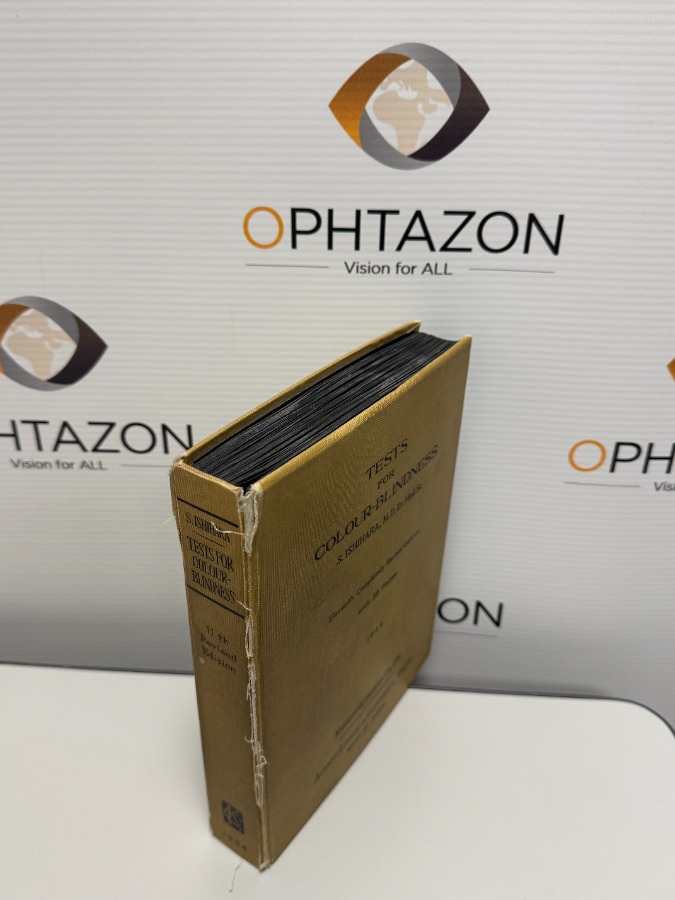
The screening for color vision deficiencies using the Ishihara Color Vision Test Book—38 plates—is based on this characteristic.
- Plate number 1 is the introductory plate, and everyone can read “12,” even those with color blindness. This is followed by 6 groups of 4 consecutive plates.
- Plates 2 through 5 therefore exploit the same color confusion. Normally, numbers different from those perceived by people with normal vision are visible in cases of red-green dichromacy.
- Plates 6 through 9 are of the same difficulty level and explore a red-green color confusion very similar to that tested in the previous group but with a different background.
- Plates 10 through 13 are based on blue-green–orange confusion. Individuals with the condition perceive nothing.
- Plates 14 through 17 are very similar to plates 6 through 9 but have a slightly different background. Furthermore, as in the previous series, color-blind subjects perceive nothing.
- Plates 18 through 21 are constructed differently. Unlike the previous ones, individuals with normal color vision or achromats see nothing, while dichromats can perceive or distinguish the numbers.
- Plates 22 through 25 are crucial because their purpose is to identify whether an individual has protanopia or deuteranopia.
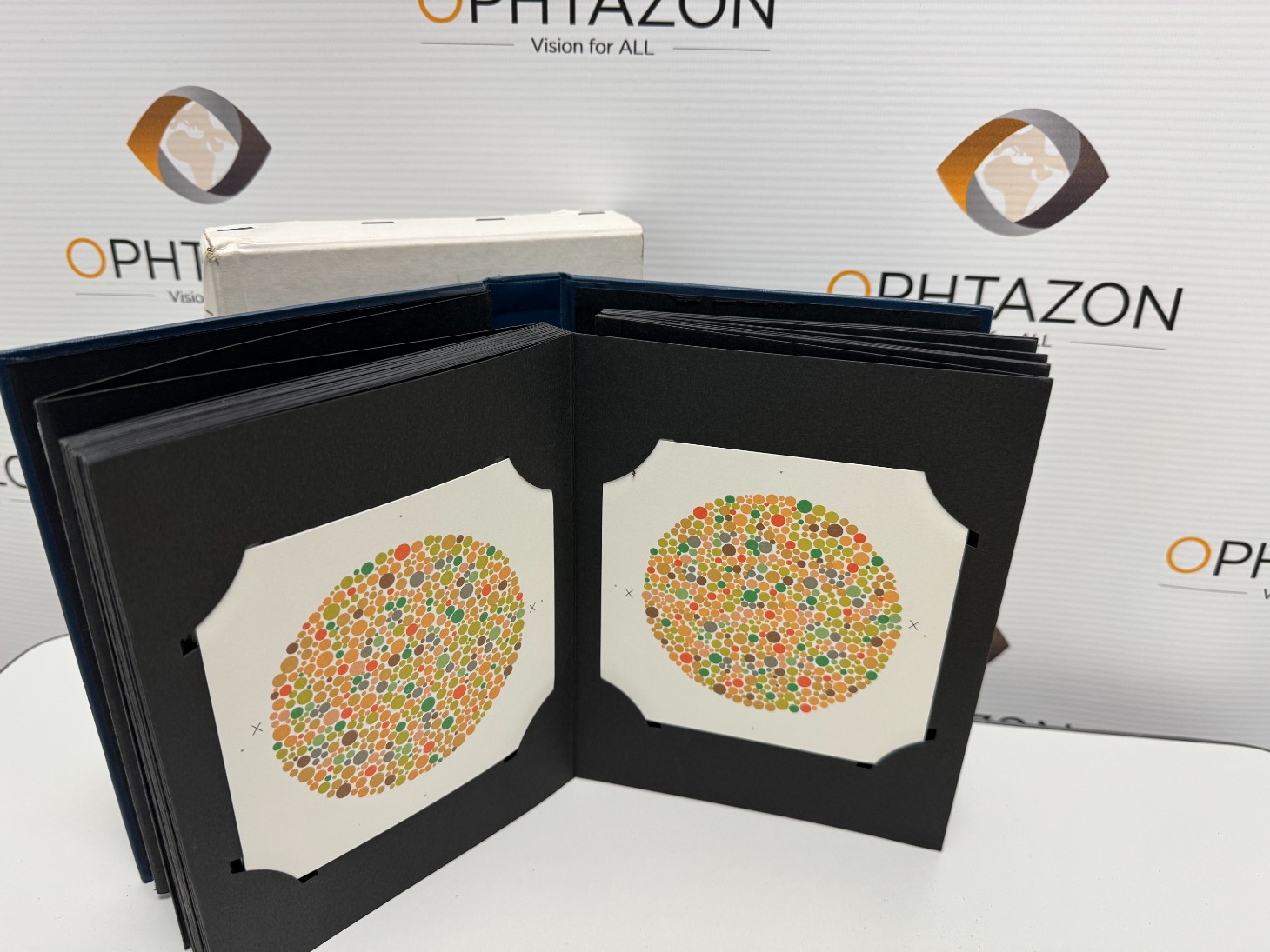
Plates 1 through 25 of the Ishihara Test Book—38 plates—must be identified in 3 seconds or less. If the subject does not recognize the numbers, plates 26 through 28 are used, on which the subject must trace the winding line between the two Xs with a brush in 10 seconds or less.
It is not always necessary to use the entire series of plates. For example, plates 22, 23, 24, and 25 may not be presented to the subject if the purpose of the test is simply to identify subjects with normal color vision by distinguishing them from those with dyschromatopsia.
In simple screening cases, it may even be sufficient to present only 6 plates from the Ishihara Test Album—38 plates. If the subject hesitates while viewing these 6 plates, they should undergo the full examination. Furthermore, the order of the plates may be varied if it appears that the subject is feigning the condition.

Checked by OPHTAZON
 3
3
Year of mfg.
-
Available

Checked by OPHTAZON
 3
3
Year of mfg.
-
Available
Checked by OPHTAZON
 3
3
Year of mfg.
-
Available
There was an error when considering the interest of the product. Please try or contact the support.

Your partnership request has been sent by email to the OPHTAZON team.
Your partnership request has been sent by email to the OPHTAZON team.
Your application for a partnership was not successful. Please try again or contact the support.
HOME
sales@ophtazon.com / +33 141 515 490
INTERNATIONAL SALES MANAGER
M. Sadreddine MEHRI
sadreddine.mehri@ophtazon.com / +33 6 08 84 07 42
TECHNICAL & SALES MANAGER IVORY COAST
M. Khaled SELLAMI
khaled.sellami@ophtazon.com / +225 07 68 46 36 14
Nous utilisons différentes technologies pour optimiser votre expérience utilisateur.
Merci de cliquer sur le bouton pour donner votre accord.
Vous souhaitez en savoir plus ? Cliquez ici

 Ophtazon
  Ophtazon Ivory Coast
  Ophtazon Sénégal
  Ophtazon Cameroon
  Ophtazon Togo